
Aesthetics, Planning, Development, Technology, Economics
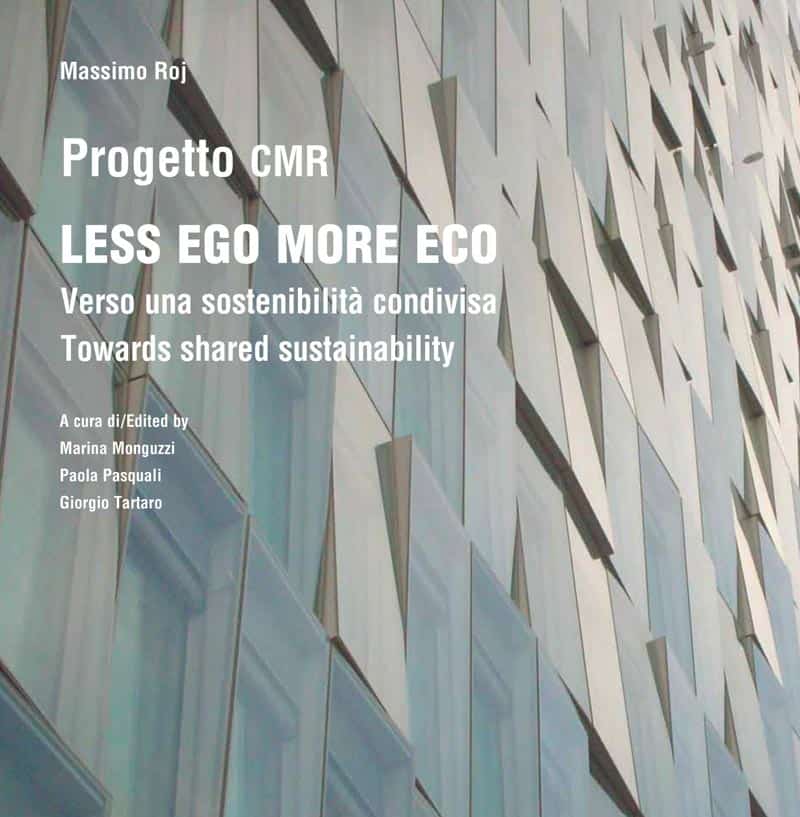
Aesthetics, planning, development, technology, economics: five different areas through which to tell the same journey towards a culture and practice of sustainability. Progetto CMR explores this journey through the book Less Ego More Eco, unveiled today for the first time. The book is the result of an extensive research process and features contributions from some of the leading figures in culture, economics, the environment and architecture, both in Italy and internationally.
The Aesthetics of Sustainability: Love for the Environment and Its Inhabitants
Are we ready to embrace a “social pact” that will lead us to define as beautiful everything that conveys research, substance, values and respect for the environment?
Designing from a sustainable perspective, according to an “inside-out” approach, means starting by listening to the needs of individuals and transforming them into the needs of the community. Despite our differences, we share technologies that have eliminated the boundaries of space and time, while facing the urgent need to address the environmental emergency.
Every territory generates an architecture that emerges naturally, a “grammar of place”: the key is to restore the centrality of human beings, rather than the works they create.
Sustainable Planning: Green Design for a Better Life
Cities have always been a reflection of those who inhabit them: today’s urban areas are the result of our behaviour, repeated over time.
On 31 May 2010, the EU Industry Committee established that, by 2020, all buildings would have to be “net zero buildings”. The fundamental challenge—in Europe as well as in highly developed countries—is to trigger a process of urban regeneration capable of managing transformation as a whole, in harmonious progression with the surrounding territory.
If the green paradigm is based on economic prosperity, social balance and a healthy environment, sustainable urban design must follow two lines of action: a compact and dense urban form, countering the current trend towards urban sprawl, and sustainable mobility.
An apparently simple recipe, but one that requires full awareness and active participation from citizens.
Sustainable Development: A Common Starting Point
Sustainability does not sustain itself. On the contrary, it requires shared awareness and collective consensus.
Fostering a “culture of sustainability” means changing an established modus operandi, starting precisely with those who live in large urban settlements. Furthermore, once this process has been initiated, it is essential to combine it with the concept of durability—something that can be replicated over time—in order to create a virtuous cycle.
Developing green societies is only possible if environmental concerns and the dynamics shaping the world’s major cities become part of the everyday routine of urban governance.
Technology and Measuring Value
Using renewable resources in proportion to their rate of regeneration, releasing into the environment pollutants that can be naturally absorbed, and using non-renewable resources at a slower rate than the introduction of renewable substitutes are three key principles underpinning sustainability.
These principles find a powerful means of practical application through technology, which is no longer regarded merely as a tool, but as an active driver of innovation.
Sustainable Economics: A Weapon Against Crisis
The world’s natural capital is the engine of social development, while the regenerative capacity of ecosystems is the factor to which financial and economic systems will ultimately have to adapt.
We are currently facing a period of economic uncertainty, and companies must be able to rethink the way they create value: investing in sustainability is the key to overcoming the crisis.
In the short term, there may be no substantial differences between companies that adopt responsible practices and those that do not. In the long term, however, companies that fail to respect environmental considerations are destined to disappear from the market.
This is because economic crises increase the level of corporate social responsibility and make sustainability an increasingly essential factor in business.